
Part I: Never Work Harder than your Students by Robyn R. Jackson
This contains Chapters 1 to 3
STORYBOOK TAKEAWAYTIPS FOR A NEW TEACHER
3/30/20252 min read
One sentence summary:
The first three chapters emphasise on understanding students' backgrounds and motivations, setting meaningful learning objectives, and designing assessments that support mastery rather than just performance.
Some key ideas:
Teach in your students' "currency"
Instead of expecting students to immediately value what we teach, we should first understand their backgrounds, interests, and motivations. Connecting learning to their context makes lessons more engaging and relatable.
Define clear learning objectives (LOs) and mastery
• Learning objectives can be classified as content-based (what students need to know) or process-based (skills they need to develop). Often, it is not so clear cut and can be mixed.
• Mastery should be clearly defined, assessable, and understandable by both teachers and students.
• Goals should be seen as a minimum standard, not a maximum limit.
Assessments should guide instruction
• Effective assessments help identify gaps, showing what can be skipped and what needs reinforcement.
• Setting minimum proficiency levels ensures all students meet a baseline.
• A well-structured rubric aligns teaching with assessment, serving as both a marking guide and a tool for student self-assessment.
My thoughts:
"Students who are not loved at home, come to school to first be loved."
The idea of "paying students in their currency" in Chapter 1 really resonated with me—it’s easy to assume our subject is inherently interesting, and value it. However, it is easy for us to pay students using the currency we value. This can lead to disinterest, as it is not the currency that they accept.
Reflecting on Chapter 2, I realised I had misinterpreted the word memorise. As teachers, we often hear that students shouldn’t just memorise but should understand and apply their learning. This made me question whether my lessons relied too much on memorisation, causing me unnecessary stress. However, I now see that memorising is a natural part of learning—what we should avoid is rote memorisation without understanding. Techniques like mnemonics, visualisations, and experiences are a form of memorising to help students store information in long-term memory more effectively for later retrieval and that is OK.
Finally, I appreciated the perspective shared on assessment. I’ve sometimes seen assessment as an endpoint, but these chapters frame it as a tool for guiding instruction. A well-designed rubric ensures students and teachers are aligned on what success looks like. Moving forward, I want to refine my rubrics to better reflect both content mastery and process skills so that my students can better critique if my teaching is helping them to achieve what the syllabus sets out for them.
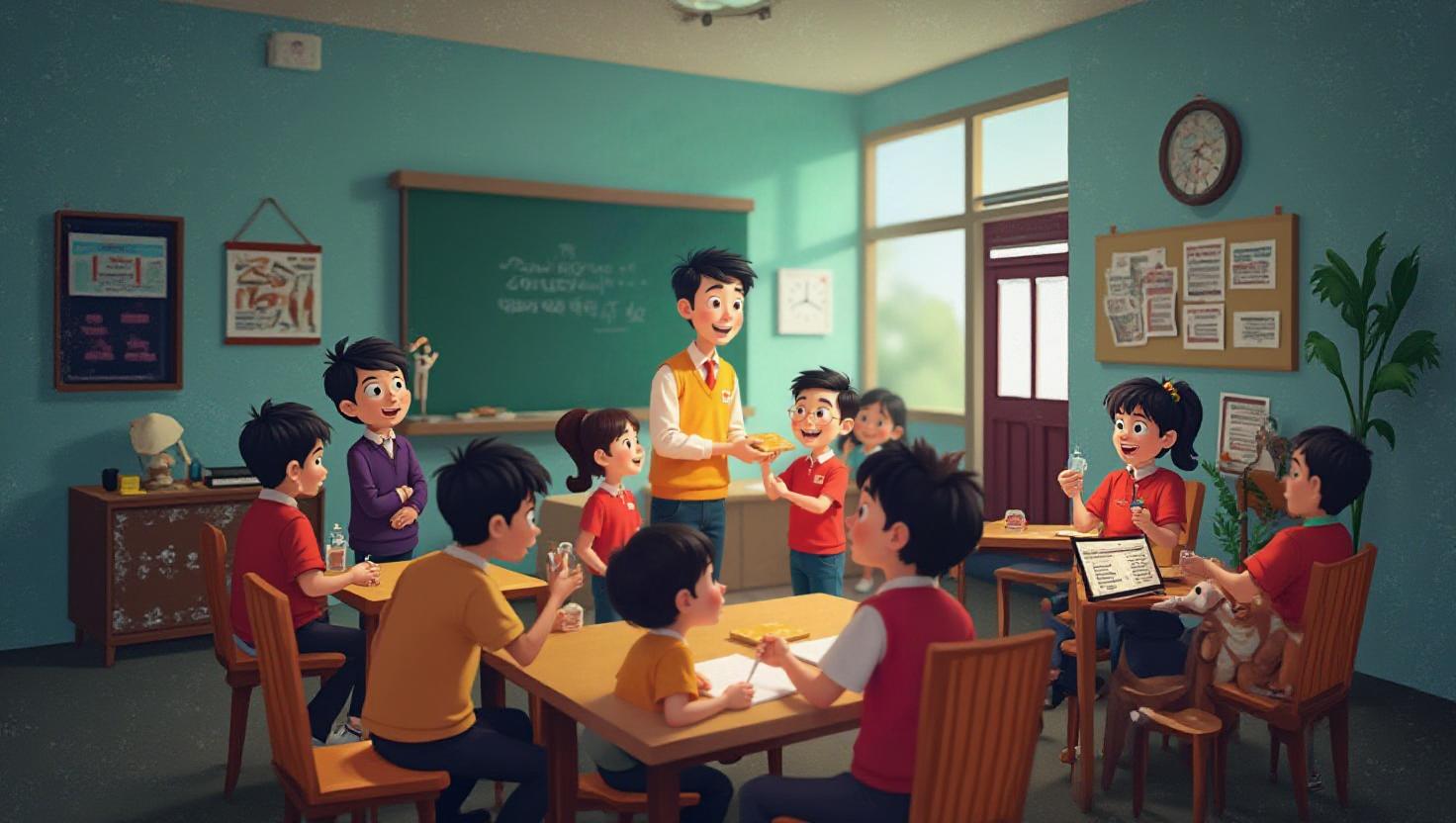
Disclaimer: This blog post is a summary of my written takeaways by ChatGPT and the cover image is generated by using the takeaway as the prompt in Freepik.