
Part III: Never Work Harder than your Students by Robyn R. Jackson
This contains Chapter 7 & 8
STORYBOOK TAKEAWAYTIPS FOR A NEW TEACHER
4/19/20252 min read
One sentence summary:
The last two chapters talk about giving responsibility back to students, and how to work on the principles sustainably to help us grow into a master teacher.
Some key ideas:
1) Build systems so students can own their learning.
If I want students to take responsibility, I have to stop doing their work for them. That means clear instructions, routines for absentees and late work, scaffolds for tasks, and helping them track their own learning. Systems create the structure that makes independence possible.
2) My job is not to manage students, but to teach them how to manage.
Poorly managed classrooms happen when teachers are doing students’ work and vice versa. I was reminded that classroom routines and expectations aren’t about control—they’re about helping students take responsibility. Logical consequences, like staying back to complete missing work, make more sense than punishments.
3) Change is slow, but consistency is everything.
Chapter 8 reminded me that I don’t need to master everything now. The real shift comes from doing the inner work: knowing my principles, noticing how students and I respond to changes, and committing to small improvements over time. No one jumps from a novice to a master teacher immediately.
My thoughts:
"It is unreasonable to simply hand students work without structure and supports and expect them to do it."
This quote really stuck with me. I used to feel frustrated when students didn’t complete assignments or got distracted, but reading this made me pause. Have I really set up the environment to help them succeed? Do they know what to do when they're absent? Do they have clear expectations and know how to ask for help? I realise that without systems, I'm just hoping things work—and that’s not fair to them. I’m starting to build these supports into my lessons, even simple ones like clearer task breakdowns or predictable routines.
The final chapter was a quiet but powerful conclusion. As a fresh beginning teacher, I often feel like I’m not improving fast enough, that I am shortchanging my students, but this chapter gave me permission to grow slowly. It reminded me to focus on principles, not just strategies. For me, that means staying intentional about what I ask students to do, noticing what works, and being okay with not having it all figured out.
I don’t need to rush—I just need to keep showing up and taking a step towards improving myself.
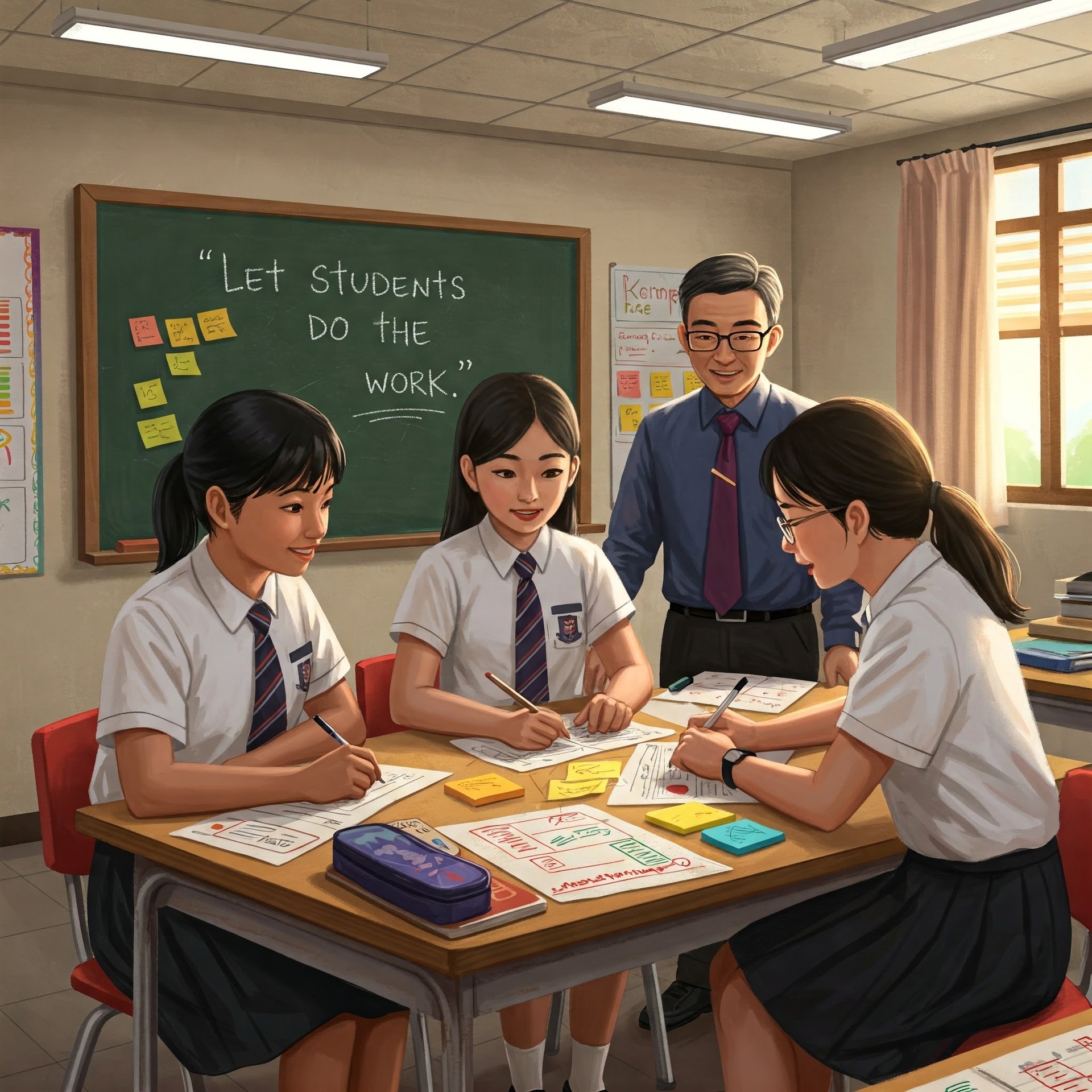
Disclaimer: This blog post is a summary of my written takeaways by ChatGPT and the cover image is generated by using the takeaway as the prompt in Gemini.